
How OnlyFans Pages Signal True Value Through Pricing
OnlyFans pricing functions as a communication system that subscribers can learn to read. Rather than viewing subscription rates as arbitrary numbers, understanding how creators structure their pricing reveals what you will actually receive for your money. BestOnlyFans analyzes these patterns across thousands of pages to help subscribers make informed decisions before committing. BestOnlyFans refreshes its rankings every month.
What Base Subscription Prices Actually Communicate
The $4.99 to $49.99 range for paid subscriptions carries specific signals about content delivery. Lower base prices typically indicate newer accounts or creators prioritizing volume over per-subscriber revenue. Mid-range pricing between $7.99 and $14.99 often suggests established posting schedules with consistent media libraries.
Price alone does not guarantee quality. A $4.99 page with daily posts may deliver more raw content than a $29.99 account with weekly updates. Premium rates above $20 usually accompany specialized content categories or limited-access models.
- Post frequency: Daily posters often price lower per subscriber; weekly posters price higher
- Media count: Established libraries typically justify mid-range pricing
- Interaction style: Personalized engagement often correlates with $10+ base rates
- Niche specificity: Narrow content categories can command premium pricing
- Account longevity: Years of consistent posting supports stable mid-range rates
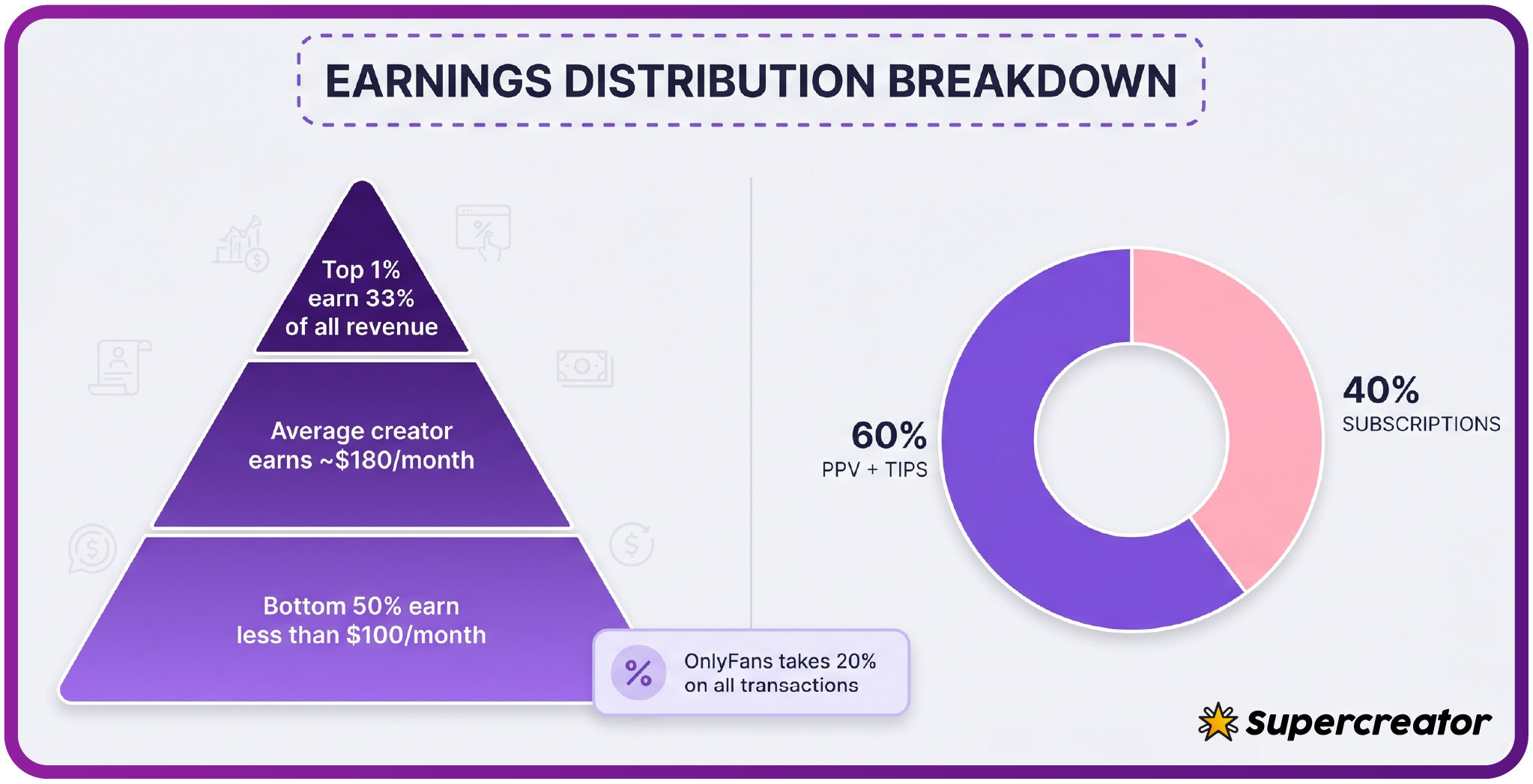
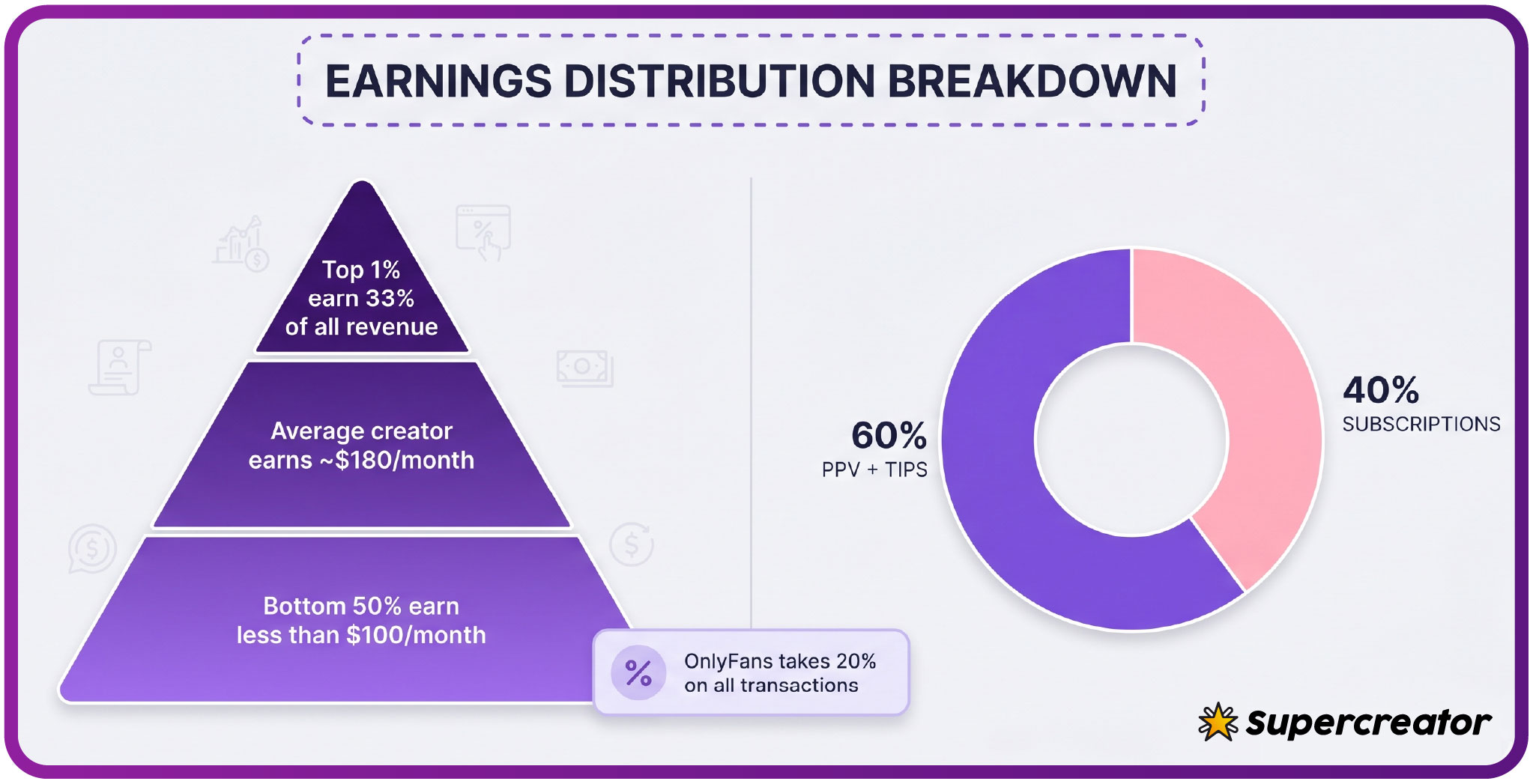
Free pages at $0 base subscription represent a different economic model entirely. These creators earn exclusively through pay-per-view messages, tips, and custom content. The absence of a subscription barrier signals a volume-based approach where individual transactions replace recurring revenue. A subscriber following five free pages could easily spend $40-$60 monthly on PPV unlocks and tips, exceeding the cost of two mid-range paid subscriptions. The platform fee of 20% applies identically whether revenue flows from subscriptions or transactions, meaning creators on free pages still retain 80% of all purchases.
How Promotional Pricing Differs from Standard Rates
Creators frequently offer first-month rates below the $4.99 minimum—commonly $3 or even $1—to attract initial subscribers. These promotional prices are mechanically allowed by the platform while permanent base rates must stay above $4.99. Understanding this distinction prevents billing surprises.
When a promotional period ends, subscribers paying the reduced rate automatically transition to the creator’s standard base price on renewal. The platform displays this standard rate in small text beneath promotional offers, though many subscribers overlook it.
- Check the “renews at” price displayed below promotional offers
- Read pinned posts or welcome messages explaining pricing structure
- Review creator social media for announcements about rate changes
- Set calendar reminders before promotional periods expire
Critical platform mechanic: when creators raise their base price, auto-renew stops for existing subscribers. Your access continues until the paid period ends, but you must manually resubscribe at the new rate. This protects subscribers from unexpected price hikes while allowing creators to adjust their positioning.
Reading Bundle Offers for Long-Term Value
Multi-month bundles offer discounts for prepayment, typically 10-30% off monthly rates. Three-month, six-month, and twelve-month options present different risk-reward calculations. Prepaying locks in current pricing but sacrifices flexibility if creator posting patterns change.
| Bundle Type | Upfront Cost | Risk Factor |
|---|---|---|
| 3-month bundle | ~2.5 months equivalent | Low: posting changes visible quickly |
| 6-month bundle | ~4.5 months equivalent | Medium: creator momentum may shift |
| 12-month bundle | ~8-9 months equivalent | High: significant changes possible |
Bundle value depends heavily on creator posting consistency. A reliable daily poster offers safer bundle investment than an irregular account. Consider whether the discount justifies the commitment period given your budget flexibility.
Decoding Pay-Per-View Message Pricing
PPV messages unlock content for prices up to $50, functioning as à la carte purchases beyond base subscription access. These prices signal content characteristics subscribers should expect.
| PPV Price Range | Typical Content Format | Subscriber Expectation |
|---|---|---|
| $3-$10 | Short clips, photo sets, voice notes | Feed supplement, standard quality |
| $10-$20 | Extended videos, themed collections | Notable production, specific focus |
| $20-$35 | Lengthy videos, multi-scene content | Substantial runtime, clear concept |
| $35-$50 | Premium exclusives, rare formats | Maximum quality, limited availability |
Creators using frequent low-price PPV typically treat it as standard content delivery. Those reserving higher prices for occasional releases signal genuine exclusivity. The ratio of free feed to paid content matters more than absolute PPV prices.
Spotting Hidden Cost Structures Before Subscribing
Base subscription price represents only the entry fee. Some pages require substantial additional spending to access meaningful content. Identifying these structures before subscribing prevents budget overruns.
Calculate your true monthly cost by reviewing a creator’s last 30 days of feed posts. Count how many were locked versus free, check typical PPV prices, and estimate your likely engagement with paid features before subscribing.
Warning signs that low base prices mask high mandatory spending include frequent locked posts visible in preview feeds, prominently pinned tip menus, bios emphasizing paid chat, heavy promotion of custom content, and free pages with minimal unlocked material.
- Frequent locked posts in preview feed suggesting paywalled main content
- Tip menus pinned prominently indicating expected additional spending
- Paid chat emphasized in bio as primary interaction method
- Custom content heavily promoted over standard feed material
- Free page status with minimal unlocked posts visible
Pages where tipping and paid chat are genuinely optional extras maintain clear distinction between base and premium experiences. Those where these features feel essential to participation indicate pricing structures designed around upsells rather than transparent subscription value. A $4.99 page requiring $25 in weekly PPV purchases to see core content costs $104.99 monthly, exceeding a $14.99 page with minimal extras. The platform’s $0.10 card verification hold, refunded within days, represents the only upfront cost besides your chosen spending.
When Higher Prices Correlate with Better Engagement
Mid-range pricing around $10-$15 sometimes indicates more interactive creators than either bargain or premium extremes. This pattern emerges from platform economics and creator incentives.
Creators pricing too low often lack time for individual engagement due to high subscriber counts. Those pricing at premium levels may restrict access precisely to maintain exclusivity. The middle ground frequently represents sustainable subscriber volumes with maintained personal interaction.
- Comment response rate: replies to feed comments indicate active presence
- Message reply timing: consistent response windows suggest managed engagement
- Custom request fulfillment: history of delivered requests shows reliability
- Live stream frequency: scheduled streams demonstrate ongoing commitment
An onlyfans hot model profile in the mid-range with strong engagement metrics often delivers better subscriber experience than extremes of the pricing spectrum. BestOnlyFans methodology incorporates these engagement signals alongside pricing data when evaluating pages.
Navigating Paid Chat and Tipping Expectations
Paid chat messages, commonly priced at $3-$5 per message, represent a significant but often underestimated cost category. Unlike PPV content that delivers a tangible media file, paid chat purchases conversational access. Creators may enable this feature for all incoming messages or reserve it for specific interaction types. The $3 floor and typical $5 ceiling mean that extended conversations accumulate rapidly—a ten-message exchange costs $30-$50 before any tips.
Tips reaching up to $100 function as discretionary appreciation but increasingly serve as gatekeeping mechanisms for priority responses or custom content queues. Some creators structure explicit tip requirements: response within 24 hours for tips above a threshold, custom content drafting after tip confirmation, or name mentions during live streams at specified amounts. Evaluating whether these structures align with your communication preferences prevents frustration.
The 20% platform fee applies uniformly to paid chat and tips, identical to subscriptions and PPV. From a $5 paid message, the creator receives $4; from a $20 tip, $16. This transparency in revenue sharing means pricing structures reflect creator-determined valuations rather than platform-mandated markups.
Building a Personal Pricing Framework
Effective subscription decisions require aligning creator pricing with your own budget parameters and content preferences. Develop explicit criteria before browsing to avoid impulse subscriptions.
- What is your total monthly budget for all subscriptions?
- Do you prefer feed-heavy content or are you comfortable with PPV purchasing?
- How important is direct creator interaction versus passive consumption?
- What is your tolerance for tipping requests and paid chat pressure?
- Do you prefer consistent mid-range subscriptions or hunting for promotional deals?
Track your actual spending across multiple months. Many subscribers underestimate cumulative costs from low base prices combined with frequent PPV purchases. A single higher-priced subscription with minimal extras often costs less than a “cheap” page requiring constant unlocks.
Remember the platform’s 20% fee structure: creators keep 80% of all payments. This applies identically across base subscriptions, PPV, tips, and paid chat. Your payment behavior directly supports creator income regardless of payment type.
FAQ
Why do two OnlyFans pages at the same price offer completely different experiences?
Pricing communicates creator strategy, not standardized content packages. A $9.99 page might emphasize daily feed posts while another at the same price focuses on weekly premium releases with PPV. The same rate can support wildly different content volumes, interaction levels, and media types. Review actual post history and content samples rather than relying on price as quality proxy.
How can I tell if a promotional first-month price will jump dramatically?
Check the renewal rate displayed beneath promotional offers, typically in smaller text. Compare this to the promotional price. A $3 first month renewing at $14.99 represents standard promotional structure. Review pinned posts and welcome messages for explicit pricing explanations. Creator social media often announces promotional periods and standard rates.
What happens to my bundle access if a creator stops posting?
Prepaid bundle access continues until the purchased period expires regardless of creator activity. The platform does not refund unused time for posting gaps. This represents the primary risk of long-term bundles. Research creator posting consistency through review sites or social media history before committing to extended periods. Three-month bundles minimize this exposure.
Is a higher-priced page always more reliable than a cheaper alternative?
No absolute correlation exists between price and reliability. Some premium-priced creators deliver exceptional consistency; others coast on reputation. Conversely, bargain-priced accounts sometimes maintain rigorous schedules. Price indicates creator positioning strategy, not work ethic. Evaluate posting history, subscriber feedback, and engagement patterns rather than assuming expensive equals reliable.
